Tuesday 17th March

The recent rain has topped the floods up nicely and they're looking really good now. On the bird front things have definitely stepped up a gear as spring starts to kick off. We finally had the first SAND MARTIN in the county which Steve Lavington spotted over the floods early afternoon today. Even better than that though was the pair of RED-CRESTED POCHARD which he also found. This species is less than annual on the Meadow - not surprising really as it's the wrong sort of habitat for them. Still, it's surprising how many years we do manage to have one or two pop in briefly. Sadly there was no sign of them by the time I visited late afternoon today.

There were finally some reasonable wader counts to report with 9 REDSHANK, 3 OYSTERCATCHERS and 2 DUNLIN on the floods today. SHELDUCK numbers are increasing gradually and Dave Doherty had an impressive 12 of them yesterday on the floods. The PINTAIL are still about with 7 of them today and there were four or so GADWALL about as well - the first for a while. The gull roost has been unproductive over the last few days with a COMMON GULL the only bird of note though Dave Doherty also had 2 YELLOW-LEGGED GULLS on Monday morning as well as 5 GOOSANDER. He also had a RAVEN which is always a nice bird to get on the Patch.

Up north in Wolvercote, Adrian Gray reported a Chiffchaff in his garden today. I've yet to hear one singing on the Patch but surely that will come any day now. So all in all, it's all kicking off nicely. It's such an exciting time of year!

In the absence of any decent bird photos here's a Common Quaker - the first moth of the year trapped in my garden


Saturday 14th March

It's all kicking off at last! Over the last few days there have been a number of spring migrant sightings to signal the end of the winter period. To start with Dave Doherty had a heard-only RINGED PLOVER on the Meadow on Thursday as well as spotting a couple of DUNLIN. On Friday Erik Sandvig found an AVOCET on the floods late afternoon. This is a great record as this species is certainly less than annual though we were lucky to have on about this time of year last year.

Erik's Avocet
To cap it all, early afternoon today James Evry has the first LITTLE RINGED PLOVER of the year, along with 5 REDSHANK, 2 OYSTERCATCHERS, 8 SHELDUCK and 3 PINTAIL. I visited late afternoon but the LRP had gone and I could only add about 25 Golden Plover to the tally.

The first Wheatears have also now hit the county though strangely enough we've yet to have any Sand Martins. This time of year is always very exciting as we welcome back our summer visitors.

Tuesday 11th March

For some time now the bird activity around my garden has stepped up a gear and all the males are now busy marking their territories with their singing - always such a joy to hear. Even the Jericho Red Kite has been very vocal of late, calling away as it wheels about over my house.

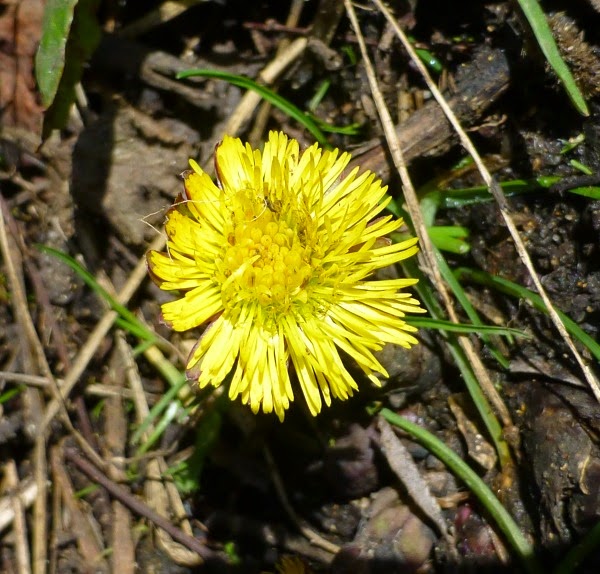
Today, as it was a gorgeously sunny spring morning, I decided to take a late morning walk around the Patch to see what I could find. There were quite a few spring flowers out in the Trap Grounds, including the first Colt's-foot, Winter Heliotrope and Lesser Celandines. A Tree Creeper was working its way up the trunks and Buff-tailed Bumblebees were on the wing. Winter Thrushes were noticeable by their absence - I found one Redwing today and that was it.

Buff-tailed Bumblebee on a Stinking Hellebore flower
Colt's-foot
Winter Heliotrope
Over on the Meadow the winter duck were dabbling about happily enough though it seemed to me that there were fewer in number than in previous weeks. There were still a couple of SHELDUCK and half a dozen or so PINTAIL about and also two REDSHANK near Burgess Field Gate - it's nice to see some waders again after what's been quite a while. With the first spring migrants now arriving in the country it shouldn't be too long now before we get our first Sand Martins and Little Ringed Plovers on the floods. Talking of the floods, whilst they're looking great at present they definitely need a bit of a top-up otherwise we will lose them all too soon so a few spring showers wouldn't go amiss.

The only news on the Year List front is a Kestrel, found by Mary MacDougall on Burgess Field a couple of days ago. Also Steve Goddard also had a fly-over CURLEW at the Trap Grounds, the day after I saw my bird last week.

Tree Creeper

Tuesday 4th March

Two posts in two days - things must be hotting up! Indeed there was a reasonably long list of "birds of note" to report today from my late afternoon visit to the Meadow. Top of the bill goes to a CURLEW that flew over calling. This species is a bit less than annual on the patch (we didn't get one last year for example) so I was very pleased to hear it's plaintive call and then to spot it flying about. It did circle once and I thought that it was going to land but sadly it didn't. Yesterday's OYSTERCATCHER was joined by a second bird which was nice to see. Also of note were the usual suspects: 6 SHELDUCK, 7 GOOSANDER and 6 PINTAIL this evening.

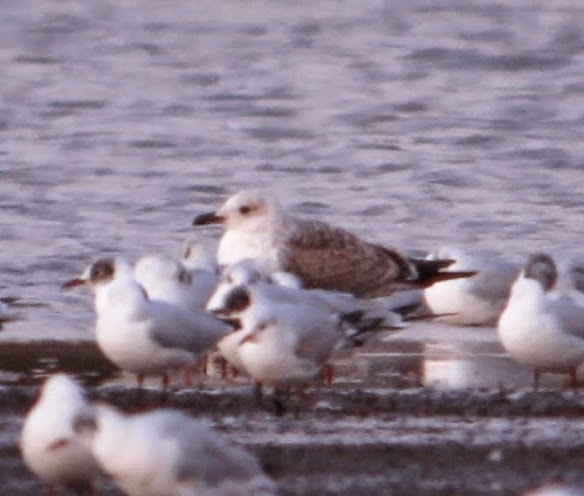
The gull roost was a rather modest affair with only a small number of larger gulls. It's a shame as I'm really hoping for a white-winger this month. Indeed a 2w Iceland Gull was seen at Didcot today so there's at least one in the county. Whilst there was nothing of note in the roost tonight, yesterday evening I had an intriguing gull which superficially looked like a 1w Caspian though it's scaps were so dark and coarsely barred that apparently (according to Ian Lewington) it can best be described as "having some Caspian parentage". We are very much getting to that time of year when all the good gulls get taken and we are left with the weirdo "unmateables".

Poor video grab - it's got something of a cachinnans about it but there's too much wrong with it!

Monday 3rd March

Another week has gone by and it's been pretty much the same birds in the same location thought that sadly is rather to be expected at this time of year. To be more specific, a few SHELDUCK, PINTAIL and GOOSANDER have been the main birds of note on the floods this week along with the usual Wigeon, Teal, Shoveler and Mallards. However, it's hasn't entirely been uninspiring and there are a few year ticks to report. First up Adrian Gray came up with two LITTLE EGRETS on the "Top Pond" on the 1st of the month. Secondly, also up in Wolvercote, Steve Goddard had a couple of RAVENS fly over "Wolvercote Lake" on the same day. Lastly, Liam Langley found the first OYSTERCATCHER of the year on the floods today. 

Oystercatcher
Talking of the year list, we've now nearly at the start of the spring migrant passage and we still have the following species outstanding: Kestrel, Nuthatch, Pheasant, Redpoll, Ruff, Siskin and Jack Snipe. The latter is unlikely now - it's not been wet enough for the pools to form in their usual location so we'll have to wait until autumn now.

The gull roost have been relatively modest though I must confess that I've not been visiting as often as I would like of late. Today was a bit better than usual though a couple of walkers did manage to put up half the flock this evening. Nevertheless we had the first adult YELLOW-LEGGED GULL in a long while and a few COMMON GULLS signalling the start of the spring passage for this species. As we move into March things should start picking up with a passage of Mediterranean Gulls also to be expected as well as straggler large white-wingers moving back northwards. What's more the Common Gulls might just bring with them a Ring-billed Gull - one can always hope!

Sunday 22nd February

My apologies for lack of posts over the last couple of week. I was away last week and fully intended to post something before I left but in the end I ran out of time. In my absence I've received a few reports from other people which I've reproduced below. Normal service should resume shortly.

Mary MacDougall writes on the 14th
I went down to Port Meadow at about 5.15pm and there was a fabulous gull roost.  My guesstimate would be about 6,000.  I don’t have a scope so I could not search through for any unusual gulls etc.  Amongst the Wigeon and Teal here were 20-25 GOOSANDER, the majority of which seemed to be male which are easier to pick out, but there were may well have been more females but they were more difficult to pick out in the gathering dusk. There was a large mixed flock about 3000 Wigeon and Teal.  I could only pick out one pair of PINTAIL.  The whole scene was amazing, as there was no wind to speak of and the water was exceptionally still.  The noise the gulls make together and whistling Wigeon, on such an evening was magic.

Then along came a woman, who was dressed quite smartly with wellies.  She determinedly walked right round the whole waters’ edge and managed to put up the whole lot!  Half the gulls flew off towards Farmoor and the Goosander disappeared.  I did not see where they went in the general melee.  You do wonder sometimes what on earth gets into peoples’ heads when in such a peaceful scene!

There was a beautiful adult Green Woodpecker on Burgess Field just by the gate.

Adrian Gray writes on the 19th from Wolvercote
Nothing much new going on in the gullet of late - it's been a fairly dull winter all told! The only news of note is that at long last the regular flock of Wigeon by the top pond on the common have appeared, maybe thirty or so, and that the drake Shoveler that's been hanging around for a while turned up dead this morning. It was in the water and unmarked, so I guess it just reached the end of its days. 

James Evry Reported on Going Birding on the 21st
6 REDSHANK: On their usual fallen tree perch along the river.
2 DUNLIN 
6 PINTAIL .
2 GOOSANDER

Wigeon

Sunday 8th February

It's been very quiet this last week and a half on the bird front on Port Meadow. The main reason for this of course has been the weather: with it being persistently cold the floods have been frozen for most of the time which dramatically reduces the birds that hang out there. That's not to say that the Meadow has been completely deserted: as long as there are some gaps in the ice there are always some hardy ducks and gull hanging out there. The main points of interest since I last posted have been three REDHSANK eking out a living along the shoreline for several days, a couple of GOOSANDER on one of the ice pools mid week as well as a single drake PINTAIL. Apart from that it's been mostly Teal and Black-headed Gulls

Hardy birds in one of the ice pools
On recent visits there have been a few Linnets and Meadow Pipits along the southern shoreline of the flood water which I've been dutifully checking through carefully but so far there have been no hidden gems in amongst them. There have been lots of winter thrushes about foraging on the ground of late. I presume that all the berries have now gone and they're switched over to worming. When it's quiet on the sports field at Aristotle Lane you can get more than fifty of them all working their way over the ground. The flock is mostly Redwings with usually a few Mistle Thrushes and Fieldfares thrown in for good measure. It's always worth checking through the flock for something rarer - you never know!


The cold weather has brought more birds in to my garden and we are now getting regular visits from a female BLACKCAP. We put out half apples impaled on a nail for her which she seems to appreciated. I also had a CHIFFCHAFF in the garden briefly a week or so ago.

Our Blackcap


28th January: Caspian Gull

It's turning out to be a good month for CASPIAN GULLS on the Meadow as this evening in strong winds and freezing temperatures I found a 1w bird in the roost. Photographing it was rather tricky but I managed to get at least some record shots of it. Also present was at least 1 adult YELLOW-LEGGED GULL and a pair of SHELDUCKS. In addition Liam Langley and James Evry saw a pair of PEREGRINE fly low over the floods as well as a flock of about 100 Golden Plover - a species which has been notable by its absence over the last month.

1w Caspian Gull record shot (it's the hindmost of the two birds)

Over the last few days it's been pretty much the usual species with usually one or two Yellow-legged gulls in the roost and perhaps up to a ten GOOSANDER coming in to roost in the evening. PINTAIL numbers have been relatively modest with perhaps about ten or so birds (not that I've counted of late).

I'm pleased to report that we now can tick off Sparrowhawk from the year list with reports from Steve Goddard, Liam Langley and Mary McDougal so that's to everyone for that. This leaves on our wish list Kestrel, Nuthatch, Pheasant, Redpoll, Ruff, Siskin, Little Egret and Jack Snipe. Talking of Siskin I read that due to a bumper crop of Sitka Spruce seeds on which they like to feed they've not needed to venture into people's gardens for food so they're rather scarce this winter.

I leave you with some rather dodgy video of the Caspian Gull (you may wish to turn down your volume because of the wind noise!).

Sunday 25th January

So another week is over and the end of January is now in sight. There's not been much to report this week: mid week the icy conditions meant that there wasn't much around on the floods though thankfully we're back in a warmer and wetter weather phase now and it's impressive how quickly the birds return. There have been a few year ticks to report: Steve Goddard added MARSH TIT (a hard bird to find on the Patch) and Chiffchaff both from his garden and Tom Evans also saw a Chiffie in the Trap Grounds as well as hearing a couple of WATER RAILS in the reedbed there.

The gull roost has been a bit hit and miss of late though Liam Langley found a nice adult YELLOW-LEGGED GULL a few nights ago. Perhaps we'll finally get some white-winged action some time soon.


Norman and Mary Gregory are getting some nice birds in their garden including several Stock Doves and Reed Buntings
For those who are interested, the current wish list of birds that we might reasonably expect before the spring migrants arrive is now down to the following:  Kestrel, Nuthatch, Pheasant, Lesser Redpoll, Ruff, Siskin, Sparrowhawk, Little Egret and Jack Snipe.

Tuesday 20th Caspian Gull

Our star birds, namely the  BARNACLE GEESE, hung around over the weekend until the ice today pushed them over to Farmoor Reservoir. Let's hope that they return once the floods thaw. Also seen over the weekend were four SHELDUCK, 3 GOOSANDER and 6 PINTAIL.

Some of the Barnies (c) Alec Nightingale

Since my last posting it's been a real team effort on the year list front. Steve Goddard managed to add quite a few species from the north end of the Meadow at up at Wolvercote, namely Reed Bunting, Stock Dove, Little Grebe, Snipe, Treecreeper and Coal Tit. In addition he found the first Green Woodpecker of the year in Burgess Field. 

Not to be outdone, James Evry visited the Meadow today (Tuesday) to find much of it frozen over. Nevertheless he managed to find a BLACK-TAILED GODWIT and best of all a first-winter CASPIAN GULL, both most welcome year ticks.

1w Caspian Gull (c) James Evry

That now puts the year list on 73 out of our revised winter target of 85 (with +1 added for the Barnacle Goose). For those who like to have target birds to look for we still need: Chiffchaff, Kestrel, Skylark, Nuthatch, Pheasant, Water Rail, Redpoll, Ruff, Siskin, Sparrowhawk, Little Egret and Jack Snipe. At least it gives one something to look out for during the lean months of winter.

Friday 16th January: Barnacle Geese

It's been another good few days on the Meadow. The river level has been steadily rising so that we're now in Transition Mode (my favourite) whereby the river has risen enough just to leave a narrow strip of grass between the floods and the river itself. A bit more rain and we'll be back in full-on Lake Mode but for now viewing from the western tow path of the river often yields nice close views of the birds.

The floods in "Transition Mode" - taken from the end of the boat moorings looking north

In terms of species on the floods it's been the usual suspects: there are about a dozen PINTAIL hanging about and today I had my first Gadwall of the year with a few birds in amongst the Wigeon and Teal. The Shelduck seem to have departed (I think they prefer it when it's less flooded) but we're still getting quite a few GOOSANDER coming in to roost in the evenings.

In terms of year ticks I've been adding species gradually - I managed PEREGRINE this week when one buzzed over low on Wednesday putting up all the birds on the floods. Rook was also a year tick (though they've no doubt been around since the 1st of January but I've just not seen one so far). The highlight of the week though must be the flock of 58 BARNACLE GEESE that were about today. These are in all probability the feral flock that inhabit the Home Counties which we had pay us a visit a couple of years ago. As official BOU Category C birds they are very much tickable so on the year list they go. 


Tickable Barnacle Geese!

Talking of the year list, I've refined my list of what I expect to find before the spring migrants arrive and I've got a total target of 84 birds. Some of these will be quite hard like Jack Snipe, Caspian Gull and Water Rail so the total represents what I can expect in the best case. These Barnacle Geese, however, weren't on the "to be expected" list so constitute the first bonus vagrant of the year. Let's hope that there are plenty more to follow.

Tuesday 13th January

There's not much to report since my last posting. I'm continuing to chip away at the year list though with a very laid back approach: I've only today added Coot, Song Thrush and Goldcrest to the list for example. The floods are looking good and attracting great numbers of duck: the usual Wigeon, Teal & Mallards and quite a few smart PINTAILS as well.  We're starting to get a nice build-up of SHELDUCK numbers again: our record from last year was in the high teens I seem to remember and we're already up to 8 birds this year. The feral WHITE-FRONTED GEESE were back in with the Greylags yesterday, adding a touch of the exotic to the vast goose flock. Waders are rather patchy still with only Lapwing being consistently present, supplemented occasionally with REDSHANK and DUNLIN. The gull roost is proving rather hit and miss of late with only modest numbers on days when I'd expect far more. Perhaps there are too many flooded fields elsewhere to tempt them but the best of the roost has been the occasional YELLOW-LEGGED GULL.

One of the White-fronted Geese (taken a couple of years ago)

Monday 5th January

After what has seemed like a very long holiday period it's back to normality at last. With the changing of the year of course comes the re-starting of the year list: it's the one time of the year when one really pays close attention to those common birds that normally tend to get ignored. I've not been in a great hurry to see everything trusting that things will be found in their own time. So far I've ticked off about 50 or so birds and by the end of February I'd expect this figure to get up to around the 75 mark.

The Meadow floods are looking very good at present i.e. nice and full without being too large and there are plenty of birds to look through. Over the last few days as well as the usual winter ducks and commoner gulls there have been peak counts of 4 REDSHANK, 2 DUNLIN, a few dozen Lapwing and Golden Plover, 6+ PINTAIL, 4 GOOSANDER and 3 SHELDUCK all gracing the floods. I've seen a Kingfisher along the Castle Mill Stream and also along the canal and Roly Pitts reported a TUFTED DUCK on the Thames a few days ago.

At last there seem to be some decent white-winged gull numbers in the country so it's time to start looking through the Meadow gull roost for Icelands and Glaucs. So far the best that I've come up with has been a 1w YELLOW-LEGGED GULL.

Review of 2014

So it's that time of year again. It's been a funny old year on Port Meadow this year. There are two main yardsticks that I use for measuring the Patch birding: the Year List and the Rare Count. The Year List has been rather a disappointment with a modest total of 125, well below the 130+ that we usually manage. There have been some notable non-sightings this year with Greenshank and Grasshopper Warbler being the most obvious two. Indeed it was a very poor year for waders: after all we only got our Ruff year tick in December and we never got any of those harder wader species like Sanderling, Turnstone or Spotted Redshank. We were also rather deficient on the Owl front with no sightings of either Barn or Little this year. As far as Gulls were concerned we managed most of the rarer species with just Glaucous being missed out. We even got Kittiwake this year which is a very rare bird for the Patch.

As far as Rares goes we can't really complain. Usually if I get a couple of nationally good birds on the Patch then I'm happy and this year we had Glossy Ibis (a Patch first), Spoonbill (pretty much annual) and Great White Egret (another Patch first) though the latter was only reported on RBA. However there was a GW Egret knocking around the county for much of the summer so I can well believe that one flew over Port Meadow air space.

So looking in more detail, what have been the highlights of the year? We started the year with the floods in full Lake Mode. January was pretty much what you'd expect with a Jack Snipe probably the highlight. February saw the floods still very extended with a Kittiwake and a Red-crested Pochard the pick of the birds. In March, as the floods finally started to get back to their usual size, it was all about the gulls with several Caspian, Iceland and Mediterranean Gulls all seen. Adding a touch of the exotic was also an escapee Cape Shelduck that hung out with an increasingly large Shelduck Flock. The first spring migrants, a couple of Little Ringed Plovers, didn't arrive until the 24th, very late this year.

3w Caspian Gull

Iceland Gull

April saw the spring migrants arrive in force. That month there was also a White-fronted Goose (of unknown origin that I ended up not counting on the year list), a Little Gull and a drake Garganey. We also had the last of the winter gulls with another Iceland Gull, a Tree Pipit in Burgess Field (a good bird for Oxon) and the first of the Rares in the form of a Spoonbill that sadly only spent a few minutes on the floods before being flushed.

This was the only Spoonbill in the whole county this year
May brought with it a Bar-tailed Godwit, a drake Garganey and the second of the Rares, a splendid Glossy Ibis that sadly only spent a single day on the Meadow before it moved to Otmoor where it stayed for the next two and a half months. An Avocet turned up and stayed a couple of days but apart from that it was a very quiet month indeed with just a Grey Plover at the end also noteworthy.

Glossy Ibis (c) Pete Roby

The May Avocet

The only birds of note in June were a couple of fly-over Green Sandpipers, normally quite tricky birds to get on the Patch so I was pleased to see them. July too was pretty birdless and I spent my time getting to know the local flowers instead. With the floods firmly dried up, in August it was up to the passerines to try and produce something of interest. We managed several Common Redstart sightings and also a pair of Whinchat and a Spotted Flycatcher - all good birds for the Patch. August did produce the third Rare of the year in the form of a Great White Egret that was reported flying over the A40 towards Port Meadow mid month. September and October were just as tough going with a Tree Sparrow in a garden in Wolvercote the pick of the birds. Towards the end of October the floods started to reform though for a while they were still rather small. 

It wasn't until November that the floods regained their full size and with the extra water came back some decent birds. As well as regular sightings of Yellow-legged Gulls there were a couple of Caspian Gulls: a 1w bird and a smart adult. A Short-eared Owl in Burgess Field was a welcome find one afternoon and there was also a remarkably showy Jack Snipe out in the open on the floods one day. This month all the winter birds came back in force and there were good counts of all the usual winter species. This theme was continued into December with plenty of birds though not much variety. The pick of the birds in December was a Ruff which finally made it onto the Year List.
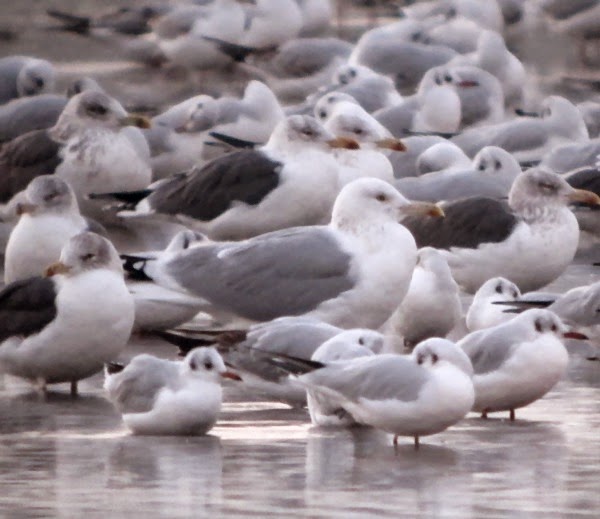
Adult Caspian Gull
On the moth front the most notable catches were firstly a tiny fern-loving micro called Psychoides filicivora, only the third ever record for the county which I caught in my garden in May. Secondly was a Toadflax Brocade which is technical a national rarity though it's rapidly colonising new areas. It was however the first record for the VC23 recording area so a nice recoding area first for my garden.

Psychoides filicivora
Toadflax Brocade
So there you have it. My general feeling looking back on the year was that it was hard work: with the floods absent for a good proportion of the year and with a very poor spring wader passage throughout the county there was a lot of slogging around for little reward. Still that is what Patch birding is all about and there's always something of interest to look at and learn about. I'm going to give the Patch Bird of the Year award to the Glossy Ibis as it was the first record for the Patch.

Finally it only remains for me to wish all my readers a Happy and Bird-filled New Year.

Saturday 27th December

Firstly, Season's Greetings & I hope that you all had a good Christmas. Today was the first time in quite a while that I've had a chance to nip down to the Meadow to check things out and fortunately there was plenty to look at. There were a lot of birds about with increased Wigeon and Teal numbers and today even some waders with four REDSHANK and eight little DUNLIN all working their way along the West Shore. In amongst the ducks were fourteen PINTAIL (all but three males) and a single SHELDUCK. Whilst it was a bit early for the gull roost proper there was a smart adult YELLOW-LEGGED GULL already in by the time that I left. With the weather set to get colder for the next few days we may well have the floods freeze again but hopefully the weather won't be so severe that all the birds leave.

Christmas Wigeon (c) Jason Coppock

Friday 19th December

My apologies for the lack of posting over the last couple of weeks. It hasn't been for lack of birds nor lack of visits on my part but the truth is that it's all been pretty much the same birds each day. There are good numbers of Wigeon and Teal about with a smattering of Shoveler, Gadwall and usually a few PINTAIL. There's been the odd wader about with a DUNLIN and a REDSHANK seen over the last week. The Lapwing flock has numbered about 40 though there haven't really been any Golden Plover to speak of with just the odd bird or two. In the gull roost there have often been a few YELLOW-LEGGED GULLS about but no more Caspians nor any white-winged gulls yet though to be fair there are hardly any of the latter in the entire country at present.

There are plenty of Wigeon around at present

Today I went down a bit early to rendezvous with Jason Coppock who had conveniently already done all the scanning for me. He managed to unearth 5 distant REDSHANK sitting on their usual log opposite the Poplar trees. It's funny how each winter there are always five Redshank and always on the same log! In addition he found a couple of SHELDUCK and three BLACK-TAILED GODWITS. A good haul for this time of year, he clearly needs to visit more often!


Sunday 7th December

It's been a fairly "samey" few days on the Meadow towards the end of the week with a few PINTAIL, a couple of GOOSANDER, a few Gadwall, some SNIPE and the odd YELLOW-LEGGED GULL the main birds of notes. Overnight on Friday a sharp drop in temperature meant that on my Saturday morning run around the patch I found the floods frozen. In the bright sunshine a few SNIPE were flying about and calling. There were just three groups of birds present on the ice: at the north end where there was a small clear patch of water, all the ducks were huddled together; in the middle section was a small selection of gulls and at the southern end near the boats there was a flock of about 40 Lapwings. In amongst this last group I was very excited to spot the orange legs of a RUFF - normally a fairly regular species on the Meadow but this year somehow we've managed to miss them so this was in fact a year tick. It just shows what a poor spring we had for waders: after all we're still missing Greenshank from the year list!

A Ruff on ice

Wednesday 3rd December

I arrived late afternoon at the floods to find all the gulls in the air once again and they never subsequently settled after that. Looking around the most likely cause was a birder on the far side of the floods who was standing rather close to the water's edge. The gulls are generally not very approachable from that side and it doesn't take much to spook them so I generally stand well back on that side. Still, what with rampaging dogs and this afternoon even a stampede of the horses there's often something that will put the birds up. There was little else to report with a couple of PINTAIL the only birds of note and relatively small flocks of Lapwing and Golden Plover.

Tuesday 2nd December

Another typical "birdy" session on the Meadow today. As far as the gulls were concerned a smattering of YELLOW-LEGGED GULLS in the roost was the only point of interest. There was more to report on the duck front though: to start with there was a pair of Gadwall in amongst the Wigeon hoard, this being the first record of this species since the floods returned. What's more James Evry had a drake GOOSANDER come in to roost at last light and also saw another on the river in the morning. Best of all was a possible Merlin sighting seen by James speeding over the floods at dusk though unfortunately the ID couldn't be confirmed as that would be a first for the Patch - certainly since I've been birding it.

Monday 1st December

Nothing of interest was reported over the weekend so today it was once again back to the Meadow for my late afternoon visit. The floods are still absolutely heaving with birds and each time as I peer into the gloom trying to make out the distant birds on the far shore I tell myself that I should come earlier to check through the Golden Plover flock for American vagrants. Today there were at a guesstimate about one thousand Golden Plover as well as several hundred Lapwing. I did spot a single DUNLIN in amongst them but as they were behind the gulls it was impossible to see them properly and there were almost certainly more. The gulls roost was once again vast in numbers and held at least 3 adult YELLOW-LEGGED GULLS as well as a nice 2nd winter bird. With the winds turning northerly and cold we might start to expect some white-wingers some time soon - they're just starting to appear in the country now. 

The highlight of the day was just as I was packing up: a flock of a dozen or so Geese came in, making a call I didn't recognise. These were neither Greylags nor Canadas and a quick re-assemblage of my scope revealed 13 WHITE-FRONTED GEESE and one BAR-HEADED GOOSE. These are going to be the feral flock that turn up from time to time - Dave Doherty saw them a few weeks back flying over the Meadow. I think that there's a bit of hybridisation going on with some of the birds which seem to have too much white on the top of their foreheads - a bit of Bar-head in there perhaps? Anyway, it was nice to see them again.

The 2nd winter Yellow-legged Gull