Mothing on the Patch

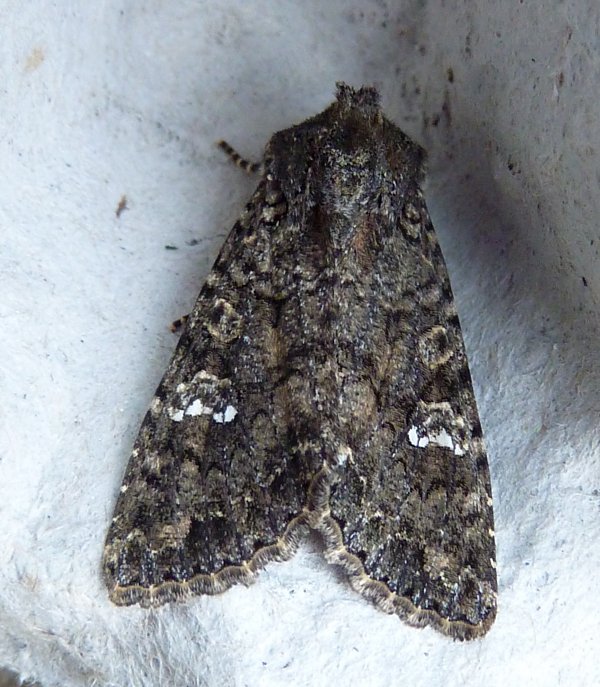
Both Steve Goddard and I are busy running our moth traps most evening in our respective gardens in the Patch catchment area. Whilst I struggle to get modest numbers, Steve is really catching some great stuff in good quantities. You can follow both our exploits on the Garden Moth Challenge web-site but I thought that I would just mention the great catch that Steve made recently. One of the thinks that I like to look out for are year firsts for the Upper Thames Branch recording area - I feel that I'm making a modest contribution to the sum of local moth knowledge by finding these. So far this year I've managed 16 of which I feel rather proud. However Steve has gone one further and found a moth that's and all time first for the UTB area in the form of an unassuming little micro called Telechrysis tripuncta. Way to go Steve!

Telechrysis tripuncta - an Upper Thames 
Branch all time first!

Friday 21st June

So we've now reached the longest day and Summer has now arrived. I was away last week and busy for the first half of this week though I've now managed a few trips down to check out the Patch. The floods are of course all dried up now and it's amazing how quickly the grass is reclaiming the dried up mud. In Burgess Field it's finally looking like June now with the Cow Parsley all gone and the May flower gone over as well. The grass is now looking very tall and lush. It's very much a case of the June doldrums on the bird front though if you look carefully there's always something of interest to see.

The Burgess Field grasses are looking wonderfully tall

There has not been much to report whilst I was away apart from a couple of OYSTERCATCHER sightings (thanks to Jodie Southgate and Ian Curtis for those). Liam Langley found a skulking Reed Warbler singing away by the southern entrance gate to Burgess Field - a rather unusual location for this species. Talking of Reed Warblers, I watched an adult bird busy feeding a full grown fledgling in the reed bed at the Trap Grounds. There, I also found the first Damselflies of the year with several Red-eyed Damselflies and one Common

 Red-eyed Damselfly - as well as the red eyes, the fact that the last two tail 
segments are blue distinguishes this from the Blue-tailed Damselfly


In Burgess Field the only butterflies I can find are still Small Heaths with no sign of any Skippers yet though I did see a Speckled Wood and I saw a Comma in my garden. A HOBBY making a half-hearted attempt to catch the House Martins by the Aristotle Lane railway footbridge was the only other bird sighting of note.

Marbled Orchard Tortix caught in the garden moth trap

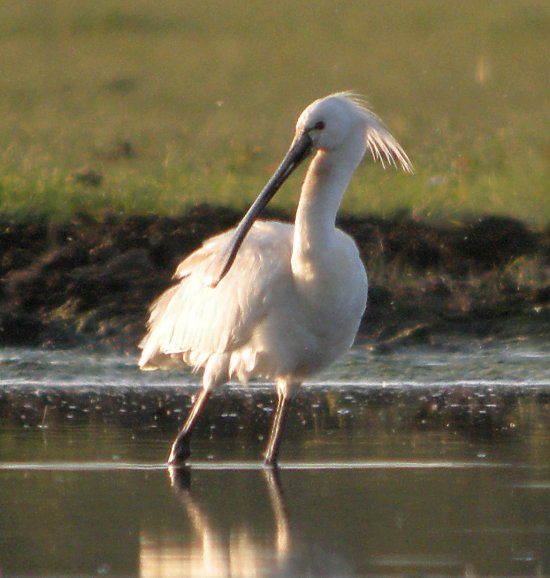
On my last posting Midlands Birder posted a comment about the neck of the flying white birds that I saw and he is of course correct that Egrets hold their necks in an S shape whereas Spoonbills hold them out straight. Thinking about it I'm pretty sure that the necks were straight which makes me even more certain that they were Spoonbills.

Saturday 8th June - Spoonbills?

I had a rather frustrating encounter with what might have been a pair of Spoonbills on the Meadow on Friday evening. I was out for an evening stroll with my two daughters with just my bins and camera rather than my scope. In the distance I spied a couple of white Egret-like birds in the tiny pool that is all that's left of the flood waters there. They were too far away to make out what they were in the fading light but they looked rather "chunky" for Little Egrets and I thought that I could just make out rather large thick bills. However before I could get closer in order to check them out a runner came out of the Burgess Field gate and they took off. As they flew they again looked chunky and rather heavy for Little Egrets and they didn't appear to have yellow feet. I called Dai John at Farmoor to let him know that they were heading over the hill towards Farmoor and he mentioned that he'd seen a couple of Egret-type birds fly over the Farmoor car park that morning but he'd only seen them rear-on and therefore couldn't ID them so they may well have been the same birds. In a quick search of Farmoor though he failed to turn up anything.

Thinking about them today and playing over in my head what I'd seen I'm very inclined to think that they were Spoonbills rather than Great White Egrets: they didn't have the long necks or lankiness of that species nor the slim elegance of Little Egrets - instead they had a "stocky" feel to them. Unfortunately I never got a clinching ID so they will have to remain "probable" - very frustrating as they would have been a great way to round off the first half of the year.

What might have been! Here's one from the archives 
that turned up early June 2011

Wednesday 5th June

At last we've had a decent spell of settled weather, some reward for enduring the biting winds for so long this year. Of course the combination of sun and what are still often breezy conditions has meant that the floods have been drying out again rapidly and are basically in their death throws once again. As Barry Hudson pointed out in a comment on a previous post, it probably is a good thing from the point of view of the natural cycle of flood meadows and certainly the Creeping Marshwort will have a chance to grow and reproduce. 

Now that we're into June things traditionally get very quiet on the bird front. Indeed the only bird news of note is that Adrian Gray reported seeing a PEREGRINE flying around the Wolvercote area. However, at least I can at last report some butterflies in Burgess Field with some Small Heaths now flying about as well as some Common Heath moths. 

 Small Heath Butterfly

The other evening I went for a stroll about the reserve and saw dozens of small whitish moths flitting about. I'm not sure what they were as they never settled properly but some were Green Carpets and I think others might have been White-pinion Spotted - I shall return another evening to investigate. Both Steve Goddard and I are continuing to moth trap regularly in our respective gardens. For my part it's been very small numbers and moths are definitely struggling this year. You can follow our progress on the Garden Moth Challenge web-site

Cabbage Moth

A Scorpion Fly found in Burgess Field by my six year old son Luke

Tuesday 28th May

Thank heavens for this rain. I know that it's very trying to have such inclement weather but the Meadow floods had in fact completely dried up by Monday. However, this prolonged period of heavy rain has managed to re-flood them quite effectively though the churned up muddy borders does still mean that it all looks rather unappealing. There's been precious little to report since my last posting, though the 26 RINGED PLOVERS did stay for one more full day before moving on. In theory it should by now be far too late for anything of interest to be passing through but given how late everything is this spring who knows what's happening. I'm still checking out the floods just in case.

With all the rain, Burgess Field is looking very green and at last the May Flower is out so in theory we can start "casting clouts" though I'm certainly keeping all my clouts on in the current chilly conditions. I've still not seen any butterflies in Burgess Field - they're several weeks late elsewhere in the county but with any luck they should start appearing some time soon.

I caught this lovely Poplar Hawk Moth in my garden a couple of days ago,
they really are huge beasts

Steve Lavington (c) took this nice photo of a Grasshopper a while back 
which I've been meaning to post for some time

Thursday 23rd May

It's been all too depressingly samey on the Patch since I last posted. The weather has been a mixed bag but never lovely and warm (which would please me) or torrential rain (which would at least top up the floods). Instead the floods have been reduced to a central pool by Burgess Channel and a subsidiary pool right down by the Southern Tail. The only birds which it now seems to be attracting are RINGED PLOVER. Indeed there have been some good counts this week with 11 (plus one DUNLIN) on Wednesday and then a stonking count of 26 today which to my knowledge is a Patch Record. The two SHELDUCK have been around on and off, there's been the odd Gadwall still lurking and the two COMMON TERNS come and sit on their little wooden platform by the pool but that's been about it. I'm still hoping that we might get a Stint or a Wood Sandpiper by the end of the month but that's based more optimism rather than any realistic expectation. 

I did check out Burgess Field to see if any of the butterflies were on the wing yet but there's no sign of them - the strange spring has put their emergence times all back several weeks. Fledglings are continuing to appear in the garden periodically: our cat brought in a juvenile Robin yesterday (sadly dead) and there was a juvenile Chaffinch on the feeders today.


A Ringed Plover Bonanza

Sunday 19th May

Unfortunately my prediction of the start of something really good after the mini fall on Wednesday has not come to fruition. Wednesday's birds left on Thursday though there were still quite a few RINGED PLOVER and DUNLIN around first thing. The dry conditions has meant that the floods have been steadily receding again and it's been hard work finding any birds there at all. On Saturday there was a single REDSHANK and four RINGED PLOVER and today there were 5 RINGED PLOVER, 2 LITTLE RINGED PLOVER and a single DUNLIN but that's been about it. 

The CUCKOO has been around in Burgess Field until Saturday at least so it looks like it may well be having a go at attracting a female to the territory though there have been no reports of the bubbling female call at all so far. Alex Martin reported a couple of reeling male GRASSHOPPER WARBLERS on Saturday evening as well - it's nice to have a couple of these secretive warblers back again.

It's been pretty tough going on the moth front as well though Saturday night was good with quite a few new species for the year. You can follow my garden mothing efforts (and those of Steve Goddard as well) on the Garden Moth Challenge web-site.

 Muslin Moth
Waved Umber

Wednesday 15th May

The weather has continued with it's unsettled and quite frankly cold theme over the last few days. I've still been dutifully checking out the floods once per day but with no reward at all worth speaking of and apart from the two SHELDUCK that seem to have taken up residence here there's been nothing of note. However, suddenly this afternoon the weather seemed to lift and we had glorious sunshine and no wind for the rest of the day. It was therefore with a certain feeling of optimism that I went for an evening visit to the Meadow where I was delighted to find a decent fall of waders: two GREENSHANK and a BAR-TAILED GODWIT were the most obvious birds present but closer inspection found a whole army of small waders: 25(!) RINGED PLOVER no less, 8 DUNLIN and to top it all a single SANDERLING (a Patch year tick). This last species is just about annual on the Meadow but by no means a certainty so I always get excited when I manage to find one. Unfortunately the flock was disturbed and flew up and circled for a while. The Plover and Dunlin duly returned but the Sanderling decided to move on.

Videograb of one of the Greenshanks and a Ringed Plover

In other news Adrian Gray reported a couple of TREE SPARROWS coming to his feeder at Wolvercote - a nice Patch year tick. In talking to veteran Meadow watcher Matthew Foster (who's been visiting regularly for literally decades), he told me how in days gone by Tree Sparrows used to nest all around the Meadow in the various willow trees. He also said that when the Medley Farm was in full swing there used to be loads of Yellowhammers and Corn Buntings everywhere. How sad that things have changed in this way.


With a total of 37 waders that's a great improvement over recent weeks and I've got my fingers crossed that this might be the start of the overdue May purple patch. During this time, large numbers of waders come and go in quick succession so it's all eyes to the floods!

Sunday 12th May

I've not posted for almost a week on here, sadly this is because there's been precious little to report. The floods had been perilously close to drying up but fortunately the rather unsettled weather has perked them up a bit. At one stage we were down to a narrow pool running from the Aristotle Lane entrance up to the Burgess Field gate but now at least part of the North Channel and some of the South Channel have been restored. In terms of birds, the highlight has been a couple of BLACK-TAILED GODWITS which arrived on Friday and have stayed until this morning at least. There have been the odd LITTLE RINGED PLOVER and RINGED PLOVER about as well, indeed today there were three of the latter accompanied by a flock of four DUNLIN looking very smart with their black bellies in their full summer plumage. Along the Castle Mill stream there have been a couple of COMMON SANDPIPER sightings and I had the fortune to come across a MARSH TIT there as well. This species is rare on the Patch, usually only seen in Wolvercote in the winter and I've only ever once before seen one on the Patch myself. There have been a few reports of a calling male CUCKOO over the last week from Adrian Gray and Cherry Robinson and this morning I was fortunately enough to hear it calling away repeatedly from both sides of Burgess Field as well as within it. It's possible that it might stick around which would be great news - there have only been passage reports of this species since I've been working the Patch. The warblers seem much more settled in Burgess Field now with several Garden Warbler territories and countless Whitethroats. There seems to be remarkably few Sedge Warblers though: in fact this morning I didn't hear a single one and I remember that last year was poor for this species as well. I know that it's not ideal habitat for them but I recall in past years, good numbers of them staking out the bramble patches territory from which they would perform their excitable songs. Other snippets from this morning included a Kingfisher by the boats and an unusual sighting of Roe Deer out in the open by the boats first thing this morning.

Whilst the unsettled weather has rather stopped my garden mothing efforts in their tracks I did notice a couple of Common Heath moths out in Burgess Field. I've not seen any butterflies of note there yet apart from the usual Peacocks and Whites etc.

With the unsettled weather set to continue for much of this week the flood levels should be safe for a while at least. It shouldn't be too long now before the Wood Sandpipers start going through and I'm still hoping for something like a Temminck's Stint or a Spoonbill despite the rather shabby looking state of the floods.

It shoulds how poor things are that a couple of Godwits should be the highlight of the week -
in May no less! Nevertheless, I'm thankful that we've still got some floods to attract some 
waders in at all.

Monday 7th May

The lovely spring weather has brought with it a real problem for the floods which are now receding rapidly and looking decidedly ropey. The whole of the Southern Tail has dried up and there are large areas of churned up mud surrounding what is now a relatively narrow area of flood water. Altogether it's looking decidedly unattractive. This coupled with the nice weather means that not much is bothering to stop off and linger on the floods at present. It seems that at present the best tactics are to visit at last light where birds are tending to drop in to roost en route to their migration destinations. Using this approach over the last few days has turned up a few RINGED PLOVER, LITTLE RINGED PLOVER and DUNLIN which have been hanging out around the fringes in the evening. Monday evening a couple of WHIMBREL dropped in whilst I was there which was nice to see - whilst this species has been recorded already this year on the patch they are hard to see as they seldom linger long. The two SHELDUCK are still around as well as the usual Mallards and the odd Teal. In Burgess Field I'm now able to report that we have one reeling male GRASSHOPPER WARBLER on territory which is great after last year's absence.

Record shot of one of the Whimbrel taken at a distance and in the dark with ISO 1600.

Friday 3rd May

A slight pick-up in activity today. It started out with gloriously sunny weather and once more an early morning visit turned up a drake GARGANEY though once again it left shortly after I arrived. The two SHELDUCK were still about but little else of note. Burgess Field was more active with noticeably more singing warblers than recently, including at least 3 male GARDEN WARBLERS and a lovely rattling male LESSER WHITETHROAT.

By the evening the weather had clouded over a bit and this brought in some more birds. Alex Martin and Steve Lavington between them found 3 LITTLE RINGED PLOVER, 1 OYSTERCATCHER, 2 CURLEW, 1 RINGED PLOVER and 1 DUNLIN. We really could do with a nice period of rain and unsettled weather now to perk up the floods and also bring in more migrants.

The sunny weather brought out a Holly Blue butterfly in my garden, the first I've seen this year.

Burgess Field Whitethroat

Thursday 2nd May

Another very quiet day. I didn't go down until last light where three LITTLE RINGED PLOVERS and the two SHELDUCK were all I could find. I did meet up with Steve Lavington who informed me of some recent sightings: one REDSHANK on the floods (the first we've had for a while) and a CUCKOO (I presume heard-only). We used to get the latter on the Patch year list regularly but it's been getting increasingly hard over the last couple of years so it's nice to have one this year.


Wednesday 1st May

Well, here we are in May already and with the new month has also come some lovely weather. The chilling wind has finally dropped and instead it was lovely spring sunshine all day. I was woken up far too early by May Day revellers so decided to get up to check out the Patch at 6am. I stopped briefly at the Anchor Pub where there were some Morris Dancers doing their thing though as the pub itself is now permanently closed it was a rather sober affair. 

On the floods themselves there was a lovely pair of drake GARAGANEY dabbling away on the water but little else of note apart from the two resident SHELDUCK. I went for a walk in Burgess Field where I finally managed to hear a GARDEN WARBLER babbling away in the undergrowth though I was rather surprised at how few birds were actually singing at this time given the lovely weather. Either they'd already done their stuff an hour earlier or perhaps not all of them have actually arrived yet. Back on the floods the Garganey had moved on - it just goes to show how quickly birds are moving through and does rather make one wonder how much is being missed. The floods aren't exactly looking their best at present with lots of dried mud all around the borders so we could do with a nice bit of rain to freshen it up.

I also visited at the last hour of daylight but there was nothing of note apart from seeing a Swift en route and a couple of hundred large gulls, mostly Lesser Black-backed Gulls roosting on the floods. Talking of gulls, I forgot to mention a nice 2nd summer YELLOW-LEGGED GULL on the floods yesterday morning.


The light was perfect for photography so these digiscoped shots 
haven't come out too badly despite the distance.

Tuesday 30th April

It's all gone rather quiet again after the Little Stint interlude. There was no sign of it this morning with just a COMMON SANDPIPER reported by Alex Martin. At last light there were 5 LITTLE RINGED PLOVER but that was about it. The chilly wind is still with us though it's forecast to drop over the coming days now.

There was a lovely sunset last night so I messed around with some silhouette shots of this Heron

Monday 29th April: Little Stint

The weather still has the nasty chilly wind but despite this somehow a decent bird has managed to get through in the form of a LITTLE STINT. It was found by Steve Lavington in the morning and stayed around all day so that a number of people could come and see it. It was hanging out with a few LITTLE RINGED PLOVERS, initially just one though their count grew to four by the end of the day. Apart from that the single BLACK-TAILED GODWIT was still about as were the two SHELDUCK. Burgess Field is still proving rather unrewarding in the wind though I'm hoping that once it abates we should see a return of the good warbler action.

A rather blurry digiscoped  shot, though the wind and strong sun made conditions rather difficult.


Later on Alex Martin managed this great footage using his iPhone (c) Alex Martin

Little Stints are pretty much annual on the Meadow though normally its only one or two sightings per year. This particular birds was in an interesting transitional plumage. You can see nice rufous tones to the flight feathers though the head and scapulars are still very grey. Let's hope that it's a prelude to a lot more top wader action over the coming weeks on the Patch.


Sunday 29th April

It's all gone very quiet again, hence the lack of posts over the last few days. The chilling northerly winds are back and the temperatures have dropped noticeably: fortunately not to the Siberian levels of our extended winter but certainly for it to feel most un-spring-like. The strong winds have kept the floods rather empty though of course at this time of year there's not much around anyway apart from drop-in passage waders. Over the last few days there have been several COMMON SANDPIPERS, a flock of 4 DUNLIN, a single BLACK-TAILED GODWIT and a few Common Terns. The SHELDUCK are still lingering around and there is a smattering of Teal still left as well as quite a few Mallards.

Away from the floods a HOBBY (the first of the year) was seen by Liam Langley over the Trap Ground allotments, there was a singing Reed Warbler in the Trap Grounds, a single Swift over the Meadow, a few Sand Martins nipping through and the usual smattering of YELLOW WAGTAILS. I'm expecting Garden Warbler any day now in Burgess Field as they're about in the county now. We just need for the wind to drop to encourage some singing. Fortunately the forecast is for improving weather with much reduced wind as the week progresses. There's been no sign of the spring purple patch yet, fingers crossed that it all kicks off shortly.

This Common Sandpiper was quite close in though I was shooting 
right into the sun so it's rather bleached out

Thursday 26th April

Things are starting to pick up a little on the Patch though at present in dribs and drabs and it very much depends on what time of day you visit as to what you get to see. First thing this morning Ewan Urquhart found an adult LITTLE GULL on the floods as well as five LITTLE EGRETS. Later in the morning an adult Little Gull was reported at Farmoor and there was no further sign on the floods so it probably hopped over the hill. Late afternoon when I went to visit, 14 BLACK-TAILED GODWITS dropped in and a COMMON SANDPIPER was working its way around the shoreline. Steve Lavington made a late evening visit at 8pm when he managed to find a WHIMBREL as well as a LITTLE RINGED PLOVER. Birds are certainly on the move though not really staying for long.

In Burgess Field the usual warblers were reported, including one or two LESSER WHITETHROATS as well as a few SEDGE WARBLERS and REED WARBLERS, the latter presumably just passing through. Ewan also had a RAVEN fly-over and there were three SWIFTS flying around over the Trap Grounds late afternoon as well.

So three new Patch year ticks in the form of the Little Gull, Whimbrel and Swift. We really are having a great season so far and are even managing to keep pace with the Otmoor year list total so far which is a real achievement though I'm not expecting this to last. I'm now cautiously starting to think of a quite big end of year total (for Port Meadow) of at least 140.


Moth news: I managed to get a Streamer in my trap overnight as well as a hard to identify micro which I'm still working on. Both these may be first for the year in the recording area (depending on whether anyone else has caught any since the last update).

The Streamer is a lovely looking moth

Wednesday 24th April

Still rather quiet on the Patch. I went for a late afternoon walk covering all the areas but couldn't muster very much. Along the Castle Mill Stream I came across the first Mallard duckling of the year which was lovely to see. On the floods themselves were about 8 YELLOW WAGTAILS, 1 WHITE WAGTAIL, a couple of LITTLE RINGED PLOVER and a single COMMON TERN which was resting on the floods for a while before flying off. In Burgess Field I heard a LESSER WHITETHROAT call briefly once and found plenty of singing Common Whitethroats. I bumped into Ben Sandford-Smith who reported that the two WHINCHAT were still about by the southern entrance gate - it's nice to have them around still.

One of the two Little Ringed Plovers

It's now getting to the time of year which in the past has been the pinnacle of the spring passage. Given what a funny spring we've had so far I've no idea if this will occur at the usual time or indeed if at all but it's certainly worth keeping the floods under close observation just in case.

Tuesday 23rd April

Another day of glorious weather today which of course makes for harder birding. The floods were virtually empty though Alex Martin did manage to find a couple of DUNLIN in the morning. I went for a late morning jog around Burgess Field where it too was very quiet with only the occasional Whitethroat song to be heard. Therefore I wasn't expecting much but somehow I managed to stumble upon a splendid couple of WHINCHAT in the West Field. This species is just about annual though scarce enough for me to get excited about finding one. Alex Martin and Liam Langley managed to twitch them and Alex even added a cracking LESSER WHITETHROAT sighting to the day's tally, another reasonably scarce bird for the Patch as somehow they never seem to stick around. I did manage to find a COMMON SANDPIPER along the Castle Mill Stream on my way home but little else. 

Tom Evans is doing a splendid job keeping the Trap Grounds well watched and he reported a couple of REED WARBLER sightings from that area from the last few days, another Patch year tick. We've now only Garden Warbler to get and we'll have got all the warblers that one might reasonably expect from the Patch (unless we manage to luck in on a Cetti's again like we did a few years back).

I only had my point and shoot camera with me so it's a very record-shot 
quality image today of one of the two lovely Whinchat

Monday 22nd April: Red-legged Partridge

It was another quiet day on the Patch with a chilly breeze and grey conditions making altogether rather bleak. The floods were deserted apart from a single OYSTERCATCHER, a LITTLE RINGED PLOVER, the two SHELDUCK still and eight or so YELLOW WAGTAILS with a couple of WHITE WAGTAILS in amongst the Pied Wagtails as well. Along the Castle Mill Stream I managed to hear my first SEDGE WARBLER of the year scratching away but there was little else of note. The highlight of the day was a RED-LEGGED PARTRIDGE found by Tom Evans down by the Trap Grounds. We often manage to get this bird on the Year List though only through occasional encounters such as this and it's by no means a certainty.