Tuesday 17th July

Today was actually reasonably sunny so for the first time in far too long I went out for a run around the patch. The insect life was certainly appreciating the sunny conditions with plenty to see along the route. Along the canal by the Trap Grounds there were several Ringlets and Common Blue Damselflies. At the Trap Grounds themselves there was a male Emperor Dragonfly still patrolling the central pond area with more Common Blue and also Blue-tailed Damselflies around the edges. At the start of the board walk there were a couple of Souther Hawkers holding territory. On the bird front a Reed Warbler was singing away occasionally in the reeds themselves. I also found a Slow Worm on the path, the first I've seen there this year.

Southern Hawker - photographed through my bins with great difficulty
 Slow Worm

On to Burgess Field where there were loads more butterflies: mostly Ringlets with one Marbled White, a few Small Skippers and Small Heaths and a couple of fresh Gatekeepers. There were also some Shaded Broad-bar moths out which I'd not seen before there though they are a common species.


 Shaded Broad-bar

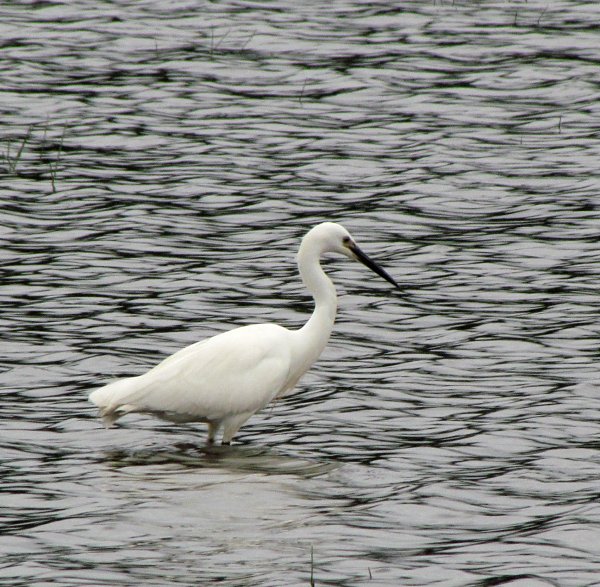
The floods themselves were pretty empty apart from the usual black-headed gulls and little egrets and ducks. With the weather forecast to improve next week we should get the floods receding enough for a bit of shoreline to re-appear and that should bring back the waders.

Monday 16th July

I wasn't able to make it to the Meadow over the weekend and there were no reports from anyone else so I thought that I'd better take a look today. Although it wasn't raining it was rather windy and the word "bleak" sprang to mind when surveying the swollen floods. These were almost birdless apart from the large contingent of black-headed gulls still with their guest MEDITERRANEAN GULL this evening. Apart from that it was just a few ducks, terns and swans about on the floods. There were one or two sand martins in amongst the hirundines this evening.


Still no bird photos in the gloomy conditions so here's another 
moth from the garden which is turning up in quite good numbers 
at present, it's a Dark Arches.

Friday 13th July

Another evening visit to the Meadow which is still heavily flooded with the river also at the top of its banks. The conditions are too flooded for the shore-line waders such as sandpipers and plover but the long-legged waders such as godwits are well suited and there are now three BLACK-TAILED GODWITS on the floods. Four noisy OYSTERCATCHERS flew in calling as I was leaving. In the gull roost the 2nd summer MEDITERRANEAN GULL was still about and there was also an interesting "ghost" black-headed gull which is nearly all white apart from some colour on its head - presumably it's a partial albino.

Videograb record shot of the partially albino black-headed gull

Some footage of the Med. gull this evening

Addendum
Mary Gregory reported a BARN OWL (a year tick) in Burgess Field late afternoon.

Thursday 12th July

9 Little Egret
2 Black-tailed Godwit
3 Oystercatcher
31 Lapwing: At least, difficult to count in the long grass.
Red Kite: Over west.

per Gareth Blockley

Wednesday 12th July

After the daily postings of last week unfortunately things did get a bit quiet. On Monday there was just one COMMON SANDPIPER to report. Fortunately today things were back on track with the (or another) BLACK-TAILED GODWIT wading in rather deep water up to the top of its legs. There were also a total of five noisy OYSTERCATCHERS around and I heard the sandpiper again. The pick of the day's sightings however was a splendid 2nd summer MEDITERRANEAN GULL in amongst the hoard of black-headed gulls.


Some video footage of the Mediterranean Gull

Saturday 7th & Sunday 8th July

Unusually for me I managed to get down to the Meadow both days this weekend. Saturday was another good wader passage day with a BLACK-TAILED GODWIT, a REDSHANK and a good total of 8 COMMON SANDPIPERS. There's been a reasonable passage of wood sandpipers elsewhere in the country the last few days and I've been hoping for one on the Meadow but so far I've not had any luck. The rain has taken its toll on the shoreline though and the plover-friendly mud is now underwater again and consequently the plovers were no where to be seen. The wigeon is still about along with the tufted duck and the usual gadwalls.

On Sunday there were just the 2 COMMON SANDPIPERS again and little else on the wader front. 


As it's been rather gloomy in the evenings when I've been on the Meadow I've not been able to take any photos of late so here are a couple of moths from the garden recently: the upper one is a Bordered Sallow which is not that common in the county (this was the first Oxon, Berks & Bucks record of the year that I know of); the lower one is a Brimstone.

Friday 6th July

After a day of solid unrelenting rain, miraculously come the evening it brightened up and there was even some sunshine for my visit. The mini wader-fest continues with the COMMON SANDPIPER and 6 LITTLE RINGED PLOVER today joined by 5 DUNLIN, 2 OYSTERCATCHERS and a REDSHANK (the last two seen by Richard Foster). In addition, Jarrod Hadfield reported an amazing total of 24 little egrets in the morning. The drake TUFTED DUCK is still around and there is a single wigeon back in amongst the other ducks.


Here's a Ringlet from Burgess Field taken last week

Thursday 5th July

Two visits to the Patch today found some more good passage birds. This morning the LITTLE GULL was back again (the first time I'd personally seen it for a while though others have continued to report it) along with at least 10 common terns, 9 little egrets, the two COMMON SANDPIPERS still and two OYSTERCATCHERS. This evening I was able to add 6 LITTLE RINGED PLOVER, 1 GREENSHANK and a CURLEW which spent five minutes in the tall grass just to the North of the floods before flying off again calling. In addition Sydney Penner had a possible Mediterranean Gull this afternoon.

I've been meaning to mention this Bee Orchid that I found in
 Burgess Field recently. I've no idea whether they've been around in 
previous years but it was nice to see.

Wednesday 4th July

More autumn passage birds today. The 2 COMMON SANDPIPERS were still around, today along the North Shore and the number of LITTLE RINGED PLOVERS has now grown to 7 birds, a mix of adults and juveniles. The (or another) smart summer plumaged BLACK-TAILED GODWIT was back and a calling CURLEW flew over but didn't land. There were 6 little egrets on the floods this morning adding an exotic touch to the floods. The gull roost is still almost entirely black-headed gulls though I was reminded by Nic Hallam today that we can soon start to look for juv. Med. Gulls in amongst them.

Some rather grainy video footage of the bird, filmed in gloomy conditions

Tuesday 3rd July

The early autumn passage has been continuing the last couple of days, enough so to warrant another posting. Yesterday there were 4 LITTLE RINGED PLOVER and today they were still present and joined by two COMMON SANDPIPER. In addition there were 1 BLACK-TAILED GODWIT and an OYSTERCATCHER earlier in the day (per Ian Smith) though they'd gone come the evening. The LITTLE GULL was reported again (per Ian Smith) though it seems to be roosting elsewhere as it's not been around for a while when I've been making my evening visits. A couple of juvenile skylarks hiding in the long grass in the gloom of dusk gave me some excitement for a while until I worked out what they were!

There have been up to 6 little egrets around of late

Sunday 1st July

Another week has gone by and at last we're starting to get the first hints of the return passage.  Highlights on the bird front this week were a COMMON SANDPIPER and two LITTLE RINGED PLOVER today and also a second LRP and an OYSTERCATCHER mid-week reported by Sydney Penner. The flood waters have receded enough to reveal some nice mud that the plovers require in order to stop over so as long as the waters aren't topped up again too much we should continue to get the odd wader dropping in occasionally from now on. Gull numbers are building continually and tonight there must have been about 500 black-headed gulls roosting on the floods. I've not seen the LITTLE GULL this week though Sydney Penner reported it mid-week. There are at least 4 common terns about and a few larger gulls are starting to drop in now so it will soon be time to start looking out for yellow-legged gulls. On the duck front it's the usual stuff though I did notice that the Rosy-billed Pochard was back on the floods for the first time in quite a while. There have been up to 9 little egrets around and good numbers of grey herons as well. Along the Castle Mill Stream I saw a kingfisher this evening and the little grebe is still about. Mid-week I had a HOBBY fly over my house which nice to see, that's only the second one seen this year on the patch though we usually get more sightings in the autumn.

 The Common Sandpiper this evening on the floods...
...and one of the Little Ringed Plovers. Both shots taken in very poor light.

On the butterfly front in Burgess Field the Marbled Whites, Meadow Browns and Ringlets are now out though only in modest numbers. There are still loads of Small Heaths and we should be getting the Small Skippers joining the Large Skippers soon. On the Trap Grounds there is a male Emperor Dragonfly holding court on the pond and loads of Common Blue Damsels there and along the ditch besides the allotments. I also saw a male Black-tailed Skimmer by the Meadow this week. Whilst still on the insect theme, I've been running a moth trap occasionally in the garden and this week I had my first immigrant moth of the year in the form of a Silver-Y.

 Common Blue Damselfly
It's nice to have the Marbled Whites out now


The immigrant Silver-Y moth. It's amazing to think that such a 
small creature migrates across the sea.

Let's hope that the return passage continues to build and that we start to get some decent birds. It's been a very poor year on the Year List front so far so there's some catching up to do.


Sunday 24th June

As promise, here is a weekend round-up of what's about at present. The answer is basically pretty much the same birds as before. Apart from the mid-week excitement of the REDSHANK, as far as gulls and terns go it's the usual black-headed gulls with the 1s LITTLE GULL still being seen periodically and several common terns. There are still large numbers of mute swans, coots, the usual ducks moulting into eclipse including the drake TUFTED DUCK though I haven't see the red-crested pochard nor the shelduck for a while, and several little egrets. The LITTLE GREBE is still in residence along the Castle Mill Stream and seems to be finding plenty of fish there.

The rain has ensured that there's plenty of flood water ready for the return passage but in the mean time I've had to make do with studying some of the local insect life on the patch. Below are selection of photos taken from this week.
 
Burnet Companion moth from Burgess Field NR
The terns can be viewed at very close quarters fishing 
in the swollen stream by the boat moorings
Garden Grass-veneer moth - a common but small 
grass moth in Burgess Field NR
Arty impressionistic mallard shot
There are plenty of fish for the little egrets to catch
As predicted last week, the Large Skippers are now out in Burgess Field NR
An Uncertain Moth (no, that's actually it's name) caught in the garden
The Scarlet Tiger Moths are finally out in my garden

Wednesday 20th June

Still very quiet on the Meadow but I did manage to find 5 REDSHANK on the floods this evening though they took flight whilst I was there and may have moved on. I'll do a full write-up of what's around at present at the weekend.

A rather distant record shot of the five redshank this evening. At this time of year
 we must be grateful for any waders that drop in on the floods.

Saturday 16th June

Another week has gone by and we're still very much in the summer doldrums. The rain has ensured that the floods are still looking very healthy and there's plenty of bird life but it's all a bit samey. The LITTLE GULL has still been hanging around with his bigger black-headed gull cousins and there are quite a few more juvenile black-headeds around now. The SHELDUCK and the the RED-CRESTED POCHARD have also been around though the former aren't always present. The gadwall flock is still hanging out along with a few other ducks including the first teal for quite a while. Still plenty of mute swans and coots and the single drake TUFTED DUCK still. There are still no waders to speak of apart from the four lapwings and the little egrets though there were a pair of OYSTERCATCHERS flying around noisily mid-week. A male YELLOW WAGTAIL down by the boats one day was a welcome diversion from the usual pieds. Still plenty of hirundines and swifts about especially when the weather is rather poor. 

In Burgess Field the weather has been too poor on days that I've visited to expect much on the butterfly front though the first large skippers are starting to be seen elsewhere in the county and I expect that they'll be out pretty soon there as well. In my garden there have been quite a few fledglings all visiting the feeders this week with the bad weather meaning that natural food is probably still rather hard to come by.

The common terns are pretty much in constant residence. With the stream running off the floods by the boat moorings so full they've regularly been hunting the fry there and it's great to watch them fishing at such close quarters

 These pair of mating Large Red Damselflies were laying eggs in our new "pond" - actually a large half barrel filled with water.

This Speckled Wood dropped in at the garden for a while during the week.

Saturday 9th June

Despite my optimism that the May passage was going to be late this year, the bald truth is that we're very much in June now with the corresponding lack of bird diversity. I've been dutifully visiting the Meadow all week but it's been the same birds on each occasion. The 1s LITTLE GULL is still around with an increasing number of other gulls and there is even starting to be some sort of gull roost in the evenings though they're almost all black-headed gulls with just one or two larger gulls. There is still just one juvenile black-headed gull about on the floods. I don't know if this means that it's been a very poor breeding year for them or whether it's just a bit early for them still. On the duck front the two SHELDUCK and the male RED-CRESTED POCHARD are both still about as well as the gadwall, a few shoveler and a single wigeon, all starting to go into eclipse. There's even been a drake TUFTED DUCK and a pair of great-crested grebes, testament to the number of fish that must be trapped in the flood waters. The vast herd of mute swans is still about (Sydney Penner counted 58 on one occasion) and there are plenty of coots and mallards about as well. When the weather is bad the swifts are always very entertaining to watch as they swoop by often only inches away.

You can tell that it's June as my photographic offerings are all butterflies and moths this week. Unfortunately they've all been taken with my point and shoot camera and so aren't particularly good quality.

 Common Marbled Carpet moth

 Common Heath moth

Small Heath butterfly with two spider friends

We should be starting to get the summer butterflies in Burgess Field soon which will offer some distraction for a while. On a more postive note, the full state of the floods and the fact that the forecast is for more showers up until the middle of July should at least mean that the floods will be around for the start of the return wader passage. Given how poor things have been this spring I'm really looking forward to it.

Monday 4th June

A morning run around the patch today. The rain over the weekend had topped up the floods a little so they were looking nicely refreshed though the nice mud shoreline has now gone so it may prove less attractive to waders. This didn't stop 3 DUNLIN from dropping in though they were wading out in the middle rather than around the edges. On the duck front the two SHELDUCK and the drake RED-CRESTED POCHARD were still around and there was some gull interest today with a adult or near adult (I only had my bins) YELLOW-LEGGED GULL on the floods as well as the first summer LITTLE GULL still.

In Burgess Field the morning sunshine brought out the butterflies and there were several dozen small heath flying around along with a similar number of common heath moths. I also found a singing sedge warbler near the gate into Burgess Field. These warblers have been noticeable by their absence this season so it was nice to hear one today.

 The pair of common terns are around pretty much all the time at present (c) Pete Styles

Saturday 2nd June

A late evening visit to the Meadow just as it was starting to rain today. The RINGED PLOVER passage continues today with a total of 16 birds today in three separate flocks, accompanied by 2 DUNLIN. Apart from that there were the 2 SHELDUCK and the other usual suspects. Also of note was the first juvenile black-headed gull of the year on the floods.

Friday 1st June

Well here we are in June and yet once again there was enough of interest on the Meadow to warrant another posting today. On a late morning run around the patch I found 6 RINGED PLOVER and 1 DUNLIN together and seperately 1 LITTLE RINGED PLOVER. On the duck front the RED-CRESTED POCHARD was still about but unfortunately there was no sign of the garganey. The first summer LITTLE GULL was back with the black-headed gulls which was nice to see. Today there were 5 LITTLE EGRETS and several grey herons and a whopping total of 51 mute swans. Very little of note in Burgess Field with just two small heath butterflies and several common heath moths about. The Trap Grounds reed beds now hold at least 4 singing male reed warblers. As in previous years one of the late-comers has had to be content with a territory in the ditch on the other side of the path from the pond - presumably all the prime reedbed spots have already been claimed.

One final thing to report is that this morning in my garden I saw a very brief glimpse of a bird which just might possibly have been a golden oriole! It was about the right size and bright yellow so it would have been a male. It was far too bright to be anything like a green woodpecker which is the classic confusion species especially with females/first summers. I only saw it for a fraction of a second in flight so I'm not claiming anything but I thought that I would just mention it.

It's nice to see the ringed plovers finally coming through on
 their passage though they're several weeks late this year

Thursday 31st May: Garganey

As we come to the end of what's been a very disappointing May I can't help but think that things are actually perking up a little with some "reportable" birds starting to come through of late. I am therefore wondering whether everything is several weeks late this year. If so then it will mean that we could be about to hit a purple patch for Meadow birding - let's hope so.

Anyway, a very brief (I was supposedly on a shopping trip!) mid-afternoon visit today found 3 RINGED PLOVER, 1 DUNLIN and 1 sleeping REDSHANK to give a reasonable wader list for a change. On the duck front the RED-CRESTED POCHARD and two SHELDUCK were about as usual and were joined by a pair of GARGANEY, perhaps failed breeders who've come to sample the delights of the Meadow floods. There were also 12 LITTLE EGRETS and 5 grey herons representing the herons.

The Red-crested Pochard has been adding a bit of colour 
to the Meadow ducks of late (c) Pete Styles.

Tuesday 29th May: Channel Wagtail

It's been pretty much the same birds as usual once more. Each evening on my visits I've found the two SHELDUCK, the drake RED-CRESTED POCHARD, several LITTLE EGRETS and the usual black-headed gulls sometimes accompanied by the one remaining 1st summer LITTLE GULL. Today as a bonus there were two RINGED PLOVER and a DUNLIN though they flew off to the North whilst I was there. The most interesting bird was a very smart male CHANNEL WAGTAIL (a hybrid between a yellow wagtail and a continental blue-headed wagtail) which was down near the boat moorings with a couple of pied wagtails.

Whilst the floods are still quite extensive, they are now looking very sorry for them selves with large areas covered in some green algae though this is still a clear channel in the middle. They could really do with a nice top-up of rain at present.


  A couple of shots of the smart male "Channel" wagtail...

...and one of the ringed plover